Jump to content

Recommended Posts

Posted
1*vzrD9ccDaorbELVLVcsz8Q.jpeg
A false-color image of 3I/ATLAS, taken on November 22, 2025. The sunward direction is towards the lower left. (Credit: Alfons Diepvens, Belgium)

The time is ripe to summarize the anomalies of the interstellar object 3I/ATLAS in ascending order of likelihood. Here is the list, split into three categories, along with the probability, P, associated with each item:

I. Major anomalies with no simple explanation:

1. P=0.00004: The forecasted perijove distance of 3I/ATLAS during its encounter with Jupiter on March 16, 2026 is 53.445 (+/- 0.06) million kilometers, identical to Jupiter’s Hills radius, 53.502 million kilometers (see here). This match was enabled by the non-gravitational acceleration that 3I/ATLAS displayed near perihelion. The rare coincidence might mean that 3I/ATLAS intends to release technological devices as artificial satellites of Jupiter, potentially at Jupiter’s Lagrange points L1 and L2.

2. P=0.00005: The arrival time of 3I/ATLAS was fine-tuned to bring it within tens of millions of kilometers from Mars, Venus and Jupiter and be unobservable from Earth at perihelion (see here).

3. P<0.001: The nucleus of 3I/ATLAS is roughly a million times more massive than 1I/`Oumuamua and a thousand times more massive than 2I/Borisov, while moving faster than both (see here and here). There is not enough rocky material in interstellar space to deliver a rock of this mass once per decade to the inner solar system (see here). This suggests that 3I/ATLAS may have targeted the inner solar system rather than was drawn at random from the reservoir of interstellar rocks.

4. P<0.001: During July and August as well as through November of 2025, 3I/ATLAS displayed a sunward jet (anti-tail) that is not an optical illusion from geometric perspective, unlike thousands of known comets (see here). The HiRISE image taken at closest approach of 3I/ATLAS to Mars, confirmed a glowing extension ahead of 3I/ATLAS along the direction of motion (see here). For a technological object, a beam of light or particles might be used to mitigate the risk from micrometeorites or rocks that could impact its surface at a relative speed of order 60 kilometers per second and release a thousand times more energy per unit mass than explosives.

5. P<0.001: The gas plume surrounding 3I/ATLAS contains much more nickel than iron as found in industrially-produced nickel alloys, and a nickel to cyanide ratio that is orders of magnitude larger than for thousands of known comets, including 2I/Borisov (see here). This might indicate an artificial origin of these unusual abundances.

6. P=0.002: The retrograde trajectory of 3I/ATLAS is aligned to within 5 degrees with the ecliptic plane of the planets around the Sun (see here). This suggests that the trajectory may have been designed.

II. Medium anomalies, which could be a statistical fluke:

1. P=0.006: 3I/ATLAS arrived from a direction coincident with the radio “Wow! Signal” to within 9 degrees (see here).

2. P<0.01: 3I/ATLAS shows extreme negative polarization, unprecedented for all known comets, including 2I/Borisov (see here). This unusual polarization may be related to its unusual anti-tail.

III. Minor anomalies, which could potentially be explained by a unique origin:

1. P<0.1: The gas plume surrounding 3I/ATLAS contains only 4% water by mass, a dominant constituent of familiar solar-system comets (see here). The plume might have resulted from the sunlight releasing the ices and dust that accumulated on the surface of a technological object during its journey through the cold interstellar medium.

2. P<0.1: Near perihelion, 3I/ATLAS brightened faster than any known comet and was bluer than the Sun (see here). This might be a signature that its engine turned on.

3. P<0.1: 3I/ATLAS exhibits sunward and anti-solar jets which require an unreasonably large surface area for a natural comet in order to absorb enough sunlight needed to sublimate enough ice to feed the mass flux of these jets (as calculated here). The jets might originate from technological thrusters.

4. P<0.1: The tightly-collimated jets from 3I/ATLAS maintain orientation across a million kilometers in multiple directions relative to the Sun despite its measured rotation. The jets might originate from technological thrusters.

5. P<0.1: Near perihelion 3I/ATLAS exhibits non-gravitational acceleration which requires massive evaporation for a natural comet (as calculated here), whereas preliminary images indicate that the object maintained its integrity and did not break up (as discussed here). Instead, the acceleration might have been produced by an engine.

***

The probability for the combined occurrence of multiple independent anomalies is the product of their individual probabilities. From the above list, it is apparent that 3I/ATLAS is an extremely rare and mysterious object, especially if it happens to be a natural comet as argued by NASA officials at the press conference on November 19, 2025 (accessible here).

In an interview on NewsNation last night (accessible here), Natasha Zouves asked me what data am I most looking for in the coming weeks. I explained that a spectroscopic measurement of the speed and composition of the jets of 3I/ATLAS would reveal whether they stem from the sublimation of pockets of ice on the surface of a rock or from technological thrusters.

ABOUT THE AUTHOR

1*LE3Xlzc3hNG5VDAGlDP8KQ.jpeg
(Image Credit: Chris Michel, National Academy of Sciences, 2023)

Avi Loeb is the head of the Galileo Project, founding director of Harvard University’s — Black Hole Initiative, director of the Institute for Theory and Computation at the Harvard-Smithsonian Center for Astrophysics, and the former chair of the astronomy department at Harvard University (2011–2020). He is a former member of the President’s Council of Advisors on Science and Technology and a former chair of the Board on Physics and Astronomy of the National Academies. He is the bestselling author of “Extraterrestrial: The First Sign of Intelligent Life Beyond Earth” and a co-author of the textbook “Life in the Cosmos”, both published in 2021. The paperback edition of his new book, titled “Interstellar”, was published in August 2024.

stat?event=post.clientViewed&referrerSou

View the full article

Join the conversation

You can post now and register later. If you have an account, sign in now to post with your account.
Note: Your post will require moderator approval before it will be visible.

Guest
Reply to this topic...

×   Pasted as rich text.   Paste as plain text instead

  Only 75 emoji are allowed.

×   Your link has been automatically embedded.   Display as a link instead

×   Your previous content has been restored.   Clear editor

×   You cannot paste images directly. Upload or insert images from URL.

  • Similar Topics

    • By MysteryFiles
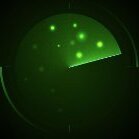
      In the latest report released by the All-domain Anomaly Resolution Office (AARO), one of the most intriguing details involves radar anomalies that defy conventional explanation. According to the findings, certain radar signatures captured during military exercises displayed trajectories and speeds that exceed the known capabilities of current aerospace technology. This raises questions not only about the origins of these anomalies but also about the potential for advanced technology that we are yet to understand. The report suggests that these signatures were recorded under controlled conditions, eliminating the likelihood of mere interference or malfunction.
      The AARO's report emphasizes the need for a more systematic approach to studying these radar anomalies, indicating that they might be linked to phenomena previously categorized as UAPs. This correlation suggests that our understanding of UAPs may need a significant overhaul, prompting further investigation into the nature and origin of these radar signatures. While the report does not definitively attribute these findings to extraterrestrial technology, the unexplained characteristics of the radar data leave a lot of room for speculation and discussion.
      Additionally, the report highlights several historical incidents where military personnel encountered similar radar anomalies, suggesting a pattern that may warrant deeper investigation. These cases, previously dismissed or overlooked, could provide critical insights into the ongoing UAP phenomenon. Members of the forum might recall instances where radar data showed objects behaving in ways that contradicted our current understanding of physics. What do you think could be the implications if these radar anomalies are indeed linked to advanced technology or phenomena beyond our current scientific comprehension?
      As we delve into these findings, it’s essential to consider the implications for both military operations and our broader understanding of aerial phenomena. The report calls for increased transparency and the establishment of protocols for investigating these anomalies more thoroughly. How do you feel about the government's approach to these findings? Are we getting closer to understanding what these radar anomalies signify, or is there still a long road ahead in unraveling these mysteries?
      The AARO's commitment to exploring these unexplained cases is promising, but it also raises important questions about the future of UAP investigations. As we await further disclosures and possibly more concrete evidence, what do you think the next steps should be for the AARO or any governmental body involved in UAP research? The source document can be accessed at [AARO's official site](https://www.aaro.mil/Next-AARO-Home-redesign/Next-Parent/Next-UAP-Report-Documents/) for those interested in examining the report in detail.
    • By MysteryFiles
      I’ve been following some reports about radar anomalies that have been spotted during recent military exercises. It seems like we’re hearing more and more about unidentified objects showing up on radar, especially in training scenarios where pilots are supposed to be in controlled airspace. These cases make me wonder if there’s something we’re not being told about these encounters.
      Just a few weeks ago, there was a report detailing how military personnel tracked some unusual objects that didn’t match any known aircraft profiles. The way they described them, it certainly sounds like they had some advanced capabilities that we might not fully understand. It’s hard not to think about what that could mean.
      Some of the specifics mentioned were that these radar signatures were often fleeting and didn’t correspond to anything on the ground or in the air that could be identified. It almost feels like the military is witnessing something that goes beyond what we typically consider to be drones or even classified technology. Could these anomalies be a sign of something more significant?
      What’s particularly interesting is that military exercises tend to involve a range of experimental technologies and tactics. So, when something strange occurs, it raises the question of whether these anomalies are a result of new tech or something else entirely. The lack of transparency around these incidents makes it tough to come up with solid explanations.
      I remember discussing similar radar cases from the past, like the infamous Phoenix Lights incident, where multiple witnesses reported seeing something that also showed up on radar. It makes me curious about the patterns we see in these types of encounters. Are we experiencing similar phenomena today?
      I think there’s enough evidence piling up that we need to dive deeper into these reports. With the way things are trending, it feels like the military may be slowly opening up about what they’ve been encountering. As we keep getting more documentation, it’ll be fascinating to see if these strange radar anomalies lead us to a clearer understanding of what's happening out there.
    • By UAPResearcher
      I recently watched the YouTube video titled 'U.S. Spacewalk 97', and it left me with plenty to ponder. This spacewalk took place in 1997, and the video showcases some intriguing moments that may be of interest to those of us studying UAPs and unusual phenomena observed during space missions. While the primary focus of the video is on the astronauts' tasks, there are moments that appear to capture unidentified objects in the background, prompting a deeper examination of what we see in the footage.
      One moment that stood out was when an astronaut, while maneuvering outside the ISS, seemed to point at something off-screen, which quickly captured my attention. The way they reacted seemed to indicate that this was not an ordinary occurrence. Given the context of the mission, the details about the location and time can lead us to question whether this was a natural phenomenon or something that requires further investigation. Was it simply a piece of space debris, or could it have been something more significant?
      Additionally, considering the historical context of U.S. Spacewalk 97, it’s worth noting that there have been numerous reports by astronauts of seeing strange lights or objects in space. The credibility of these accounts is strengthened by the fact that astronauts are trained observers, familiar with various celestial phenomena. Such experiences, combined with the visual evidence from the video, could potentially contribute to our understanding of what is occurring beyond our atmosphere.
      Moreover, I found myself wondering about radar data during this spacewalk. Have there been any analyses comparing observed anomalies in the video with radar tracking systems that monitor objects in near-Earth space? The lack of comprehensive public data on UAP sightings makes it essential for researchers to scrutinize available footage and correlate it with any documented radar readings or military encounters from that timeframe. It’s an avenue that should definitely be explored further, especially since the video appears to show something that may warrant a closer look.
      As we continue to engage with discussions surrounding UAPs and space exploration, it’s crucial that we approach such videos with an analytical mindset. This helps to ensure that we don’t jump to conclusions but instead seek to understand the data we have. For those who have expertise in image analysis or can provide insights into the technical aspects of what we are seeing, your input would be invaluable. What do you think about the anomalies captured in U.S. Spacewalk 97? Could this footage provide clues to deeper questions about what's out there in the cosmos?
    • By MysteryFiles
      In the recent NASA Moon Base Update video from June 30, 2026, there's a moment that caught my attention, and it’s not just the ambitious plans for lunar habitation. The video presents an aerial view of the proposed Moon Base layout, but if you look closely, there appears to be a peculiar geometric pattern etched into the lunar surface in the vicinity of the base. This strange detail, which some might easily overlook, raises questions about the geological history of the area. Could it be a natural formation, or is there more to the story? It feels like something that could easily be dismissed, yet it invites speculation about unknown forces at play on the Moon.
      As NASA moves forward with its plans for a permanent presence on the Moon, we are reminded of the many unexplained cases regarding lunar anomalies. The video mentions the importance of utilizing cutting-edge technology for surveying the lunar landscape, but it does not address the implications of potential pre-existing structures or formations that might influence our understanding of the Moon’s history. Could these patterns be remnants of early alien technology or signs of a past civilization? I find it fascinating to think about how much we still have yet to uncover.
      Another intriguing moment comes when the speaker discusses the materials being sourced for construction on the Moon. There’s a segment where they highlight the unusual composition of lunar regolith in certain areas, suggesting it might be useful in ways we have yet to fully understand. This raises the question of whether these materials could have been influenced by past extraterrestrial activity. Are there unknown chemical compositions that could point to interactions with alien technology or life forms? The ambiguity of this topic adds an exciting layer to our understanding of the Moon, and I can't help but wonder how much is still hidden beneath its surface.
      The Moon has long been a subject of fascination, and the recent advancements from NASA only add fuel to the fire. It's intriguing to think about how historical reports of strange lights and unexplained phenomena on the lunar surface could correlate with this new data. Are we on the brink of uncovering extraordinary truths about our closest celestial neighbor? The discussion around possible unexplained occurrences on the Moon seems to be gaining traction, and I’d love to hear from others about what they think these patterns might signify.
      As we analyze the claims presented in this latest update video, it would be interesting to explore other lesser-known incidents related to lunar exploration. Has anyone here delved into earlier missions where similar anomalies were reported? What do you think is the most likely explanation for these patterns? Are they just natural occurrences, or do they hint at something far more enigmatic? Let's discuss our theories and see where this leads us!
    • By Avi Loeb Medium
      The latest image of a fading 3I/ATLAS on March 11, 2026 at 19:22:54 UTC, based on ten 120 second, R-band exposures with a 25-centimeter telescope and an angular resolution of 1.38 arcseconds per pixel. Jupiter is outside the field of view. (Image Credit: Toni Scarmato)The interstellar object 3I/ATLAS is fading away. It will get closest to Jupiter on March 16, 2026 and then head out of the Solar System in a nearly symmetric fashion to the way it came in. I say `nearly symmetric’ because 3I/ATLAS exhibited a small non-gravitational acceleration, owing to a remarkable system of jets.
      The passage of 3I/ATLAS on a retrograde orbit within 5 degrees of the ecliptic plane provided an ideal opportunity for a spacecraft to intercept its path, take a close-up photograph, collect a sample from it, or even plant a capsule full of technology or life-as-we-know-it in its belly and hitchhike it to interstellar space at 60 kilometers per second — twice as fast as our fastest rockets. We missed all of this rare opportunity.
      We should aim to do better in our next encounter with a mysterious interstellar object. But given the rare properties of 3I/ATLAS, it is unclear whether we will be given such an opportunity any time soon. So long, our interstellar friend.
      The nature of 3I/ATLAS is intriguing because of the following 22 anomalies:
      Mass Budget Discrepancy:
      1. The inferred nucleus diameter of 2.6 kilometers and number density of its parent population (assuming a natural comet) exceed the mass reservoir of planetary disks around low-metallicity stars (as inferred here and here) by orders of magnitude. More details are available here.
      Geometric Rarities:
      2. The retrograde trajectory of 3I/ATLAS is aligned to within 5 degrees with the orbital plane of the planets around the Sun, with a probability of 0.2% (as discussed here). The Milky-Way disk is misaligned with the ecliptic plane by about 60 degrees. This suggests that the trajectory of 3I/ATLAS may have been planned.
      3. The arrival time of 3I/ATLAS was fine-tuned to bring it to minimum distances of 29 and 54 million kilometers from Mars and Jupiter, respectively, and be unobservable from Earth at perihelion (as discussed here).
      4. The perijove distance of 3I/ATLAS during its encounter with Jupiter on March 16, 2026 is 53.6 million kilometers, is very close to Jupiter’s Hill radius, 53.5 million kilometers (as discussed here).
      5. Analysis of the Hubble Space Telescope image of 3I/ATLAS from July 21, 2025 (as discussed here) suggests that the anti-tail before perihelion must have been in the form of a collimated jet towards the Sun that is about ten times longer than it is wide. This is similar to the collimation observed in post-perihelion images out to several hundred thousand kilometers. No known comet exhibited a physical sunward jet of this length that is not a perspective effect. For a technological object, a beam of particles might be used to block the solar wind from impacting the nucleus surface at a relative speed of order 500 kilometers per second. In addition, the veil of dust around 3I/ATLAS is just of the right column needed to block sunlight from hitting the nucleus surface (as discussed here).
      6. At large distances, the initial rotation axis of 3I/ATLAS was aligned to within 8 degrees with the sunward direction when it entered the solar system (as reported here). The probability for that is 0.5%.
      7. The observed wobble of the pre-perihelion anti-tail jet in the direction of the Sun (as reported here during July and August 2025) requires the base of the jet to be within 8 degrees from the sun-facing pole, with a probability of 0.5%.
      8. The existence of a prominent anti-tail jet towards the Sun on the way of 3I/ATLAS out of the solar system requires a similar coincidence near the opposite pole of the rotation axis (as discussed here). The fact that a collimated jet appears as the sunward anti-tail both before and after perihelion (while reversing direction at perihelion relative to the direction of motion), has a tiny probability of occurring at random, equal to the square of 0.5% or 0.000025.
      9. The launch base of the post-perihelion anti-tail jet resided on the nightside of 3I/ATLAS before perihelion and the base of the pre-perihelion anti-tail jet is now on the nightside of 3I/ATLAS after perihelion. For these bases to be active only when facing the Sun, they must be well insulated on the nightside for a period longer than several months. Heat naturally flows by conduction throughout the body of a natural comet, making this insulation requirement difficult to satisfy.
      10. The gravitational deflection of 3I/ATLAS by 16 degrees at perihelion (as discussed here), is exactly twice the opening angle of the anti-tail before perihelion. This coincidence allows the wobbling jet around the rotation axis to generate an anti-tail in the direction of the Sun before perihelion and a counter jet on the opposite pole after perihelion, with a jet opening angle of 8 degrees on both poles.
      11. On January 22, 2026, 3I/ATLAS aligned with the Sun-Earth axis to within an extraordinarily small angle of 0.69 degrees (as discussed here). At that time its anti-tail pointed at Earth.
      Possible techno-signatures:
      12. 3I/ATLAS arrived from a direction coincident with the radio “Wow! Signal” to within 9 degrees, with a probability of 0.6% (as discussed here).
      13. Processing of 40 Hubble Space Telescope Images from November 2025 to February 2026 by the Larson-Sekanina filter — which removes the circularly-symmetric glow round the nucleus, reveals a system of three mini-jets which are symmetrically separated by 120 degrees from each other (as discussed here and here). Are these symmetric jets coming the sublimation of pockets of ice on a rock or technological thrusters?
      14. The non-gravitational acceleration of 3I/ATLAS was not directed away from the Sun but had a substantial sideways component (as discussed here).
      Composition Anomalies:
      15. Before perihelion, the gas plume surrounding 3I/ATLAS contained much more nickel than iron, as found in industrially-produced nickel alloys, and a nickel to cyanide ratio that is orders of magnitude larger than for thousands of known comets, including 2I/Borisov (as reported here).
      16. The anti-tail penetrated hundreds of thousands of kilometers through the solar wind and the solar radiation. In order not to be stopped, the dust particles must be much larger than common sub-micron particles of interstellar dust (as discussed here). However, if the particles are bigger than a millimeter, then they must carry an untenable amount of mass in order to account for 99% of the scattered sunlight around 3I/ATLAS, as observed in the Hubble images.
      17. Data from the SPHEREx space observatory indicated the existence of icy fragments around 3I/ATLAS before perihelion (as reported here in August 2025). However, the spectral signature of ice disappeared in the SPHEREx data after perihelion, taken during December 2025 (as reported here), when abundant organic molecules in gas phase, such as CH3OH, H2CO, CH4, and C2H6, were discovered, along with an enhancement by a factor of ~20 in the water production rate. To survive cosmic-ray bombardment along an interstellar journey that lasted billions of years, these organic molecules must have been buried under a thick layer of material, at least 10-meters in depth.
      18. The isotope abundances of hydrogen (D/H) and carbon (12C/13C) are markedly different from Solar System comets and suggest an rare birth environment with a freezing temperature of less than 30 degrees Kelvin and a low metallicity (as discussed here).
      Possible Bio-Signature:
      19. The volatility of methane (CH4) is between that of carbon dioxide (CO2) and carbon monoxide (CO), yet methane was detected in the gas plume around 3I/ATLAS only after perihelion, while CO2 and CO were detected long before perihelion. This puzzle (discussed here) suggest a strange layered composition of the nucleus. Methane and other organic molecules are known bio-markers. Does 3I/ATLAS carry life on it (as discussed here)?
      Unusually High Mass, Speed, Polarization and Perihelion Brightening:
      20. The nucleus of 3I/ATLAS is more massive than 1I/`Oumuamua and 2I/Borisov, while moving faster than both (as discussed here and here).
      21. 3I/ATLAS shows extreme negative polarization, unprecedented for all known comets, including 2I/Borisov (as discussed here and here). This unusual polarization may be related to its unusual anti-tail.
      22. Near perihelion, 3I/ATLAS brightened faster than any known comet and was bluer than the Sun (as discussed here).
      ***
      Given these 22 anomalies, the nature of 3I/ATLAS remains mysterious. Even if 3I/ATLAS is a natural comet, there are some fundamental aspects of its physical properties and birth environment that we do not understand. Many of the above anomalies, like its near alignment with ecliptic plane or the “Wow! Signal”, will be treated by comet experts as chance coincidences. But others, like the mass budget discrepancy, the prominent anti-tail jet or the symmetric jet structure must be explained by physical models.
      It is easy to insist that 3I/ATLAS is a natural comet while ignoring these anomalies. However, it is the responsibility of scientists and NASA officials to acknowledge the existence of unexplained puzzles rather than display the arrogance of expertise while ignoring them.
      When 3I/ATLAS was discovered in July 2025, I gave it a rank of 4 on the Loeb Classification scale of interstellar objects (quantified here, here and here), where 0 means a natural comet and 10 means alien technology that poses a major threat to humanity. Given all that we have learned so far and assuming that nothing unusual will occur near Jupiter, I regard 3I/ATLAS — which showed cometary activity, to be only slightly less anomalous than 1I/`Oumuamua — which had no visible cometary activity and a larger non-gravitational acceleration.
      Science is fun as long as we treat life as a learning experience.
      ABOUT THE AUTHOR
      (Image Credit: Chris Michel, National Academy of Sciences, 2023)Avi Loeb is the head of the Galileo Project, founding director of Harvard University’s — Black Hole Initiative, director of the Institute for Theory and Computation at the Harvard-Smithsonian Center for Astrophysics, and the former chair of the astronomy department at Harvard University (2011–2020). He is a former member of the President’s Council of Advisors on Science and Technology and a former chair of the Board on Physics and Astronomy of the National Academies. He is the bestselling author of “Extraterrestrial: The First Sign of Intelligent Life Beyond Earth” and a co-author of the textbook “Life in the Cosmos”, both published in 2021. The paperback edition of his new book, titled “Interstellar”, was published in August 2024.
      Professional website:
      https://lweb.cfa.harvard.edu/~loeb/
      Social media:
      https://avi-loeb.medium.com/
      https://www.youtube.com/@ProfessorAviLoeb
      https://open.spotify.com/show/1zhndXkvSY2b8FdjspFpCd
      https://x.com/ProfAviLoeb
      View the full article

×
×
  • Create New...