
Images of 3I/ATLAS on November 22–24, 2025
-
Similar Topics
-
 By DisclosureWatch
The recent release of the first images from ESA's JUICE mission has stirred a lot of buzz in the astronomy community. Seeing Jupiter's moons up close for the first time is truly stunning. It's interesting to note how different each moon looks, with some appearing icy and others showing signs of geological activity. Do you think these differences could hint at varying histories or potential for life?
I'm particularly intrigued by Ganymede’s surface features. The images reveal a mix of bright and dark regions, suggesting a complex geologic past. It's fascinating to think about what processes could have shaped such a landscape. So, how do you all interpret these features based on what we know?
Also, I noticed some commentary about Callisto and its heavily cratered surface. Many are wondering if its age could impact our understanding of the moon's history and potential future explorations. Are there theories out there that suggest why some moons are more geologically active than others?
I can't help but think about how this mission will inform our understanding of the broader context of the Jupiter system. With the data coming in, we might be able to draw parallels to other celestial bodies in our solar system. Do you think this could reshape our ideas about habitability in extreme environments?
As we await more data from JUICE, I wonder what specific aspects of these moons you find most exciting or puzzling. Which features do you think will provide the most groundbreaking insights into our understanding of the Jovian system? Let's keep the conversation going as more images and data come in!
-
 By UAPResearcher
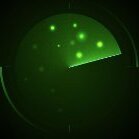
The radar data from the UAP encounter in November 2025 seems to have sparked quite a bit of conversation lately. I’ve been looking through some of the analysis reports, and there are a few details that stand out regarding object tracking and orbital behavior. It appears that some of these UAPs exhibited flight patterns that defy our current understanding of aerodynamics, raising questions about their origin.
One aspect that caught my attention was the speed at which these objects were detected. The reports indicate that the radar systems in use were able to lock onto the UAPs almost instantly. This capability suggests advancements in our surveillance technology that could significantly impact how we monitor objects in our atmosphere, but it also raises concerns about what else might be flying around undetected.
Additionally, the data suggests that there were multiple UAPs in proximity to each other during the event. This clustering behavior isn’t something we've typically seen in previous encounters. It’s intriguing to think about the implications of objects operating in tandem. Could this point to a coordinated effort or a set of vehicles operating under a unified control?
I also noticed that there was a lack of follow-up from relevant government agencies, which is a bit puzzling given the data's potential importance for space domain awareness. With the increasing number of near-Earth objects, it feels crucial that we have a comprehensive understanding of these UAPs to inform both civilian and governmental monitoring efforts.
What do you all think about the potential for these UAPs to be tied to any known or unknown space programs? It seems like the more we analyze these encounters, the more they challenge our existing frameworks for understanding what is out there. Do you believe the November 2025 data could lead to significant changes in how we approach space surveillance?
As we continue to analyze this incident, I’m curious about what other members have found in their research. Have any of you come across additional documentation or analysis that sheds further light on the radar data and its implications for our understanding of UAPs and orbital tracking? It seems like there’s still a lot to unravel here.
-
 By AlienMan
If you’ve ever searched for “real alien pictures” or “extra terrestrial alien images,” you’re definitely not alone. Interest in UFOs, UAP sightings, extraterrestrial life, and mysterious alien encounters continues to explode online as new government disclosures, declassified files, and viral sightings fuel curiosity around the world.
From classic flying saucer photos to modern unexplained aerial phenomena, the fascination with extraterrestrials has never gone away. Communities dedicated to UFO research and alien discussions continue to grow as people search for answers about what may exist beyond Earth.
Classic Grey Alien Depictions
The “Grey Alien” is one of the most recognizable extraterrestrial depictions in UFO culture. Large black eyes, thin bodies, oversized heads, and mysterious behavior have made these beings a central topic in alien encounter stories for decades.
Many UFO researchers believe reports involving Grey-type entities helped shape modern alien mythology. Whether these beings are real extraterrestrials, psychological phenomena, or something else entirely remains one of the biggest mysteries in paranormal history.
Famous UFO and Flying Saucer Images
Some of the most discussed UFO photographs ever taken include the McMinnville UFO photos from Oregon, the Calvine UFO image from Scotland, and numerous military-related UAP sightings that remain unexplained today.
Online UFO communities continue to debate which images may represent authentic unexplained aerial phenomena versus hoaxes, military aircraft, atmospheric effects, or camera anomalies. Even after decades of investigation, many sightings still have no definitive explanation.
Alien Worlds and Extraterrestrial Civilizations
Scientists continue searching for extraterrestrial life throughout the universe. Researchers study potentially habitable exoplanets, moons like Europa and Titan, and distant star systems that may contain conditions suitable for life.
Modern astronomy suggests there could be billions of potentially habitable planets in the Milky Way alone. While no confirmed alien civilization has been discovered, the search for intelligent extraterrestrial life continues through projects involving radio signals, atmospheric analysis, and deep space observation.
Why Alien Pictures Continue to Trend Online
Interest in alien pictures and UFO images remains massive because the subject combines science, mystery, conspiracy theories, government secrecy, and humanity’s biggest unanswered question: Are we alone in the universe?
Recent declassified UFO documents and renewed media coverage have pushed extraterrestrial topics back into mainstream discussion.
Popular search phrases include:
real alien pictures extraterrestrial beings UFO sightings alien spacecraft images unidentified flying objects government UFO files ancient aliens Area 51 aliens extraterrestrial life evidence best UFO photos ever taken If you’re fascinated by UFO sightings, alien encounters, unexplained phenomena, government disclosures, and extraterrestrial mysteries, visit Aliens and Space Forum to join discussions, share theories, and explore the latest alien and UFO topics with other enthusiasts.
Sources & References
Pixabay alien and UFO image archives Discussions on famous UFO photos from the UFO community Scientific discussion of extraterrestrial life research -
 By USH
An unusual post, shared by US President Donald Trump on his social media account Trump’s Truth Social platform, appeared to show an gray humanoid alien in handcuffs being escorted beside the President and his security personnel. No explanation was provided regarding the purpose or meaning of the AI-generated image.
Many believe the post may be referencing the recent release of UFO-related files connected to the US Department of Defense, commonly known as the Pentagon UFO disclosures.
One day the public is told that members of Congress have witnessed things during classified briefings that they cannot openly describe, and the next day the President is sharing an image of himself walking beside an alien figure. It blurs the line between entertainment, speculation, and a subject many people believe deserves serious attention.
Like the Pentagon UFO files themselves, this AI-generated image does not represent true disclosure. To many observers, it feels more like political theater surrounding one of the biggest questions in human history. If there is genuine truth behind the UFO phenomenon, the public deserves transparency and seriousness rather than symbolism and viral spectacle.
For decades, UFO sightings, encounters, and unexplained reports have often been mixed with media sensationalism, distraction campaigns, or psychological narratives. Some even speculate that imagery like this could be preparing the public for future narratives involving staged extraterrestrial scenarios or a so-called “fake alien invasion.”
Those theories intensified further after another images posted on Trump’s Truth Social account appeared to depict a large-scale space conflict connected to the US “Space Force.”
Such images are rarely posted without purpose, they often carry a deeper message, one we may soon begin to understand.
View the full article
-
 By Avi Loeb Medium
An image of the interstellar object 3I/ATLAS, taken from a distance of 66 million kilometers on November 6, 2025, by the JANUS camera onboard ESA’s Juice mission to Jupiter. The direction of the Sun is indicated on the top left by a yellow arrow pointing straight down. The blue arrow marks the direction of motion of 3I/ATLAS, along the 7 o’clock direction. The inset displays concentric brightness contours around the nucleus. (Image credit: ESA/Juice/JANUS)The European Space Agency (ESA) just released here a new image of the interstellar object 3I/ATLAS, obtained by the JANUS camera onboard the Jupiter Icy Moons Explorer (Juice) spacecraft. JANUS is a multicolor optical camera designed to take high-resolution photos of Jupiter and its icy moons.
The image was taken on November 6, 2025, a week after closest approach of 3I/ATLAS to the Sun. It displays jets coming out of the nucleus of 3I/ATLAS opposite to the direction of the Sun. This is surprising since pockets of ice on the surface of a rock are supposed to be warmed up by sunlight on the Sun-facing side, creating jets that are initially directed at the Sun. The JANUS image resembles images taken by amateur astronomers from Earth around the same time, as I reported here, here, here and here.
The JANUS camera took this image from a distance of 66 million kilometers, about 172 times the Earth-Moon separation. Throughout the month of November 2025, the Juice spacecraft used five of its science instruments to observe 3I/ATLAS, namely: JANUS, MAJIS, SWI, PEP and UVS.
During the months that followed these observations, the Juice spacecraft was on the opposite side of the Sun relative to Earth. As a result, it was using its main high-gain antenna as a heat shield and its smaller medium-gain antenna to send back data to Earth at a slower rate. The related analysis teams had to wait until last week to receive the full extent of the collected data.
In total, JANUS took more than 120 images of 3I/ATLAS, whereas the MAJIS, UVS and SWI obtained spectroscopic data regarding the composition of the gas plume around 3I/ATLAS, and PEP provided particle-collection data. Juice’s navigation camera also photographed 3I/ATLAS, and the analysis of that data is expected to be publicly released within a month.
Recent images from the Hubble Space Telescope (archived here) implied that the diameter of the nucleus of 3I/ATLAS is 2.6 kilometers (as reported here), much bigger than the interstellar objects 1I/`Oumuamua and 2I/Borisov.
The Juice spacecraft is expected to arrive at Jupiter in July 2031, where it will study Jupiter’s icy moons: Ganymede, Callisto, and Europa. However, 3I/ATLAS will arrive within 53.6 million kilometers from Jupiter as soon as March 16, 2026, as a result of its higher speed.
When 3I/ATLAS will arrive closest to Jupiter, NASA’s Juno spacecraft will be able to observe it with all its instruments (listed here), including its low-frequency radio antenna. Half a year ago, I led a paper, posted here, which demonstrated that Juno could have intercepted the path of 3I/ATLAS if it still had most of the fuel that it started with. Congresswoman Anna Paulina Luna echoed this opportunity in an official letter that she posted online, as reported here. A crash of Juno on 3I/ATLAS could have given us a clear close-up view of this interstellar visitor a few seconds before impact.
As I told a reporter today, it does not make sense for us to chase after 3I/ATLAS with a new expensive mission at this time (as contemplated here). The situation is similar to visiting a bar and noticing an interesting person. However, by the time you leave your chair — that person left the bar and you realize that a chase down the street would require a huge effort. Under these circumstances, it makes most sense to look around for other interesting person rather than to obsess about the missed opportunity.
For the same reason, our best strategy following our recent encounter with the anomalies of 3I/ATLAS (as listed here plus here) would be to wait patiently for a future opportunity of an interception mission with another interesting interstellar visitor. We will likely discover hundreds of interstellar objects this century with the Rubin observatory monitoring the southern sky and the Argus array monitoring the northern sky.
If one of the future interstellar objects will maneuver towards Earth without any effort required on our behalf to reach it, this particular visitor will rank at the highest alert priority of 10 on the Loeb Classification Scale (as quantified here, here and here). The alarming question, as with any blind date, would be whether this dating partner is proactive because it is friendly or because it is hostile. Time will tell.
ABOUT THE AUTHOR
(Image Credit: Chris Michel, National Academy of Sciences, 2023)Avi Loeb is the head of the Galileo Project, founding director of Harvard University’s — Black Hole Initiative, director of the Institute for Theory and Computation at the Harvard-Smithsonian Center for Astrophysics, and the former chair of the astronomy department at Harvard University (2011–2020). He is a former member of the President’s Council of Advisors on Science and Technology and a former chair of the Board on Physics and Astronomy of the National Academies. He is the bestselling author of “Extraterrestrial: The First Sign of Intelligent Life Beyond Earth” and a co-author of the textbook “Life in the Cosmos”, both published in 2021. The paperback edition of his new book, titled “Interstellar”, was published in August 2024.
Professional website:
https://lweb.cfa.harvard.edu/~loeb/
Social media:
https://avi-loeb.medium.com/
https://www.youtube.com/@ProfessorAviLoeb
https://open.spotify.com/show/1zhndXkvSY2b8FdjspFpCd
https://x.com/ProfAviLoeb
View the full article
-
Recommended Posts
Join the conversation
You can post now and register later. If you have an account, sign in now to post with your account.
Note: Your post will require moderator approval before it will be visible.